
Technology
Bioreactor & fermenter for research
and development
The optimal cultivation environment completed
through CNS technology
To manufacture highly efficient microorganism fermenters,
CNS introduced Korea’s first indirect sterilization method.
Optimized for high-cell-density cultivation, this system combines advanced precision control of pH, DO, gas, and temperature to deliver superior performance and exceptional reliability.
CNS’s indirect sterilization technology preserves media nutrients
in their optimal state, resulting in higher yields and more consistent cultivation performance.
This method achieves sterilization by heating and circulating jacket water through a heat exchanger,
effectively preventing carbonization on the internal surfaces of the bioreactor and browning of the culture medium.
As a result, the system minimizes variability in media composition, ensuring consistent product quality and high productivity.
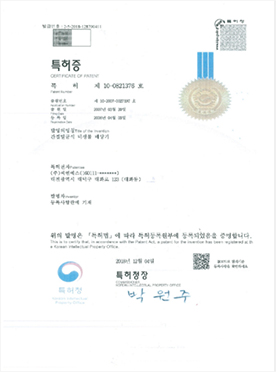
Patent No. 10-0821376
- Minimized nutrient degradation, as steam does not come into direct contact with the culture medium
- Simplified piping design for easier cleaning and maintenance
- High energy efficiency, enabling significant reductions in operating costs
- Minimized media component degradation
- Simplified piping design
- Reduced maintenance costs
An advanced cultivation system overcoming conventional sterilization limits, offering enhanced energy efficiency and easy maintenance.
An indirect sterilization microbial cultivation system
that overcomes conventional sterilization limitations,
enhancing energy efficiency and ease of maintenance.
In particular, it minimizes degradation
of internal contents during sterilization,
and indirectly sterilizes the internal medium
by heat exchange between cooling water and steam
through a temperature-control jacket.
Cultivation System
Applications

Life science industry

Chemical reactions

Pharmaceuticals

Plant cell bioreactors

Microbial pesticides

Animal cell bioreactors
Indirect Sterile Cultivation System
Effects of the invention
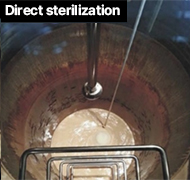
- Non-uniform internal tank temperature, leading to variations in cultivation conditions
- Excessively high internal surface temperatures causing medium carbonization
- Reduced durability of tanks, pipes, and valves, resulting in increased maintenance requirements
- Preserving medium components to maintain stable and optimal cultivation conditions
- Reduced mechanical and thermal stress, enabling easier maintenance and extended equipment lifespan
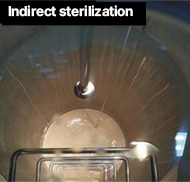
- Uniform internal tank temperature
- Indirect heat transfer minimizes degradation of medium components
- Enhanced durability of tanks, pipes, and valves, reducing maintenance costs
- Precise temperature control prevents overheating and overcooling, improving energy efficiency
- Reduced reactor deformation caused by negative pressure during sterilization, enhancing system safety
